Small Dumpster Rental
Small dumpsters handle home cleanouts, remodeling debris, and yard waste for North Haledon homeowners and contractors.
Will a small dumpster leave demolition debris behind or trigger an overage fee after drop-off? Heavy-duty roll-offs handle dense loads better, while clear rules prevent billing surprises.
In North Haledon, New Jersey, demolition crews often mix lumber, drywall, and masonry. A container that looks large can still reach its weight limit before reaching the rim.
Ask for written tonnage, disposal terms, and pickup timing before the truck arrives. Confirm prohibited items, including paint, batteries, tires, and appliances containing Freon.
The right waste removal service matches container capacity with the demolition phase. NJ Dumpster Rentals can help contractors plan local delivery, placement, and removal, with service areas across the country available for broader projects.
Capacity: A roll-off dumpster prevents a dumpster too small for the project when crews estimate demolition debris by cubic yard and material density.
Routing: A nearby transfer station can shorten hauling time, helping contractors reduce the disruption caused by delayed pickup and exposed debris.
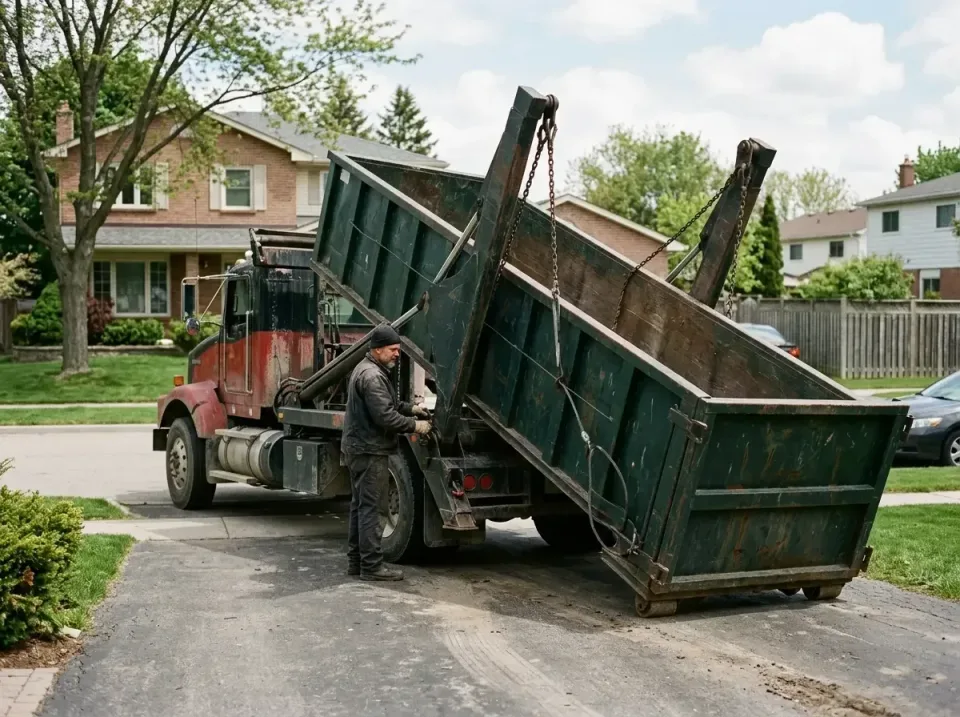
Protection: A dumpster spotter guides the cable-hoist roll-off truck, while driveway protection planning helps prevent cracking from heavy equipment.
Access: Measure turning space before delivery, because a narrow approach can force a dry run, delay the job, or require a different placement plan.
Documentation: Request a weight ticket and written tonnage terms before loading, then compare construction waste handling practices with the container provider’s disposal process.
Demolition contractors need capacity for sudden volume changes, dense materials, and fast loading. A small residential bin may hold construction and demolition (C&D) debris initially, but concrete, brick, soil, and plaster can reach the weight limit quickly.
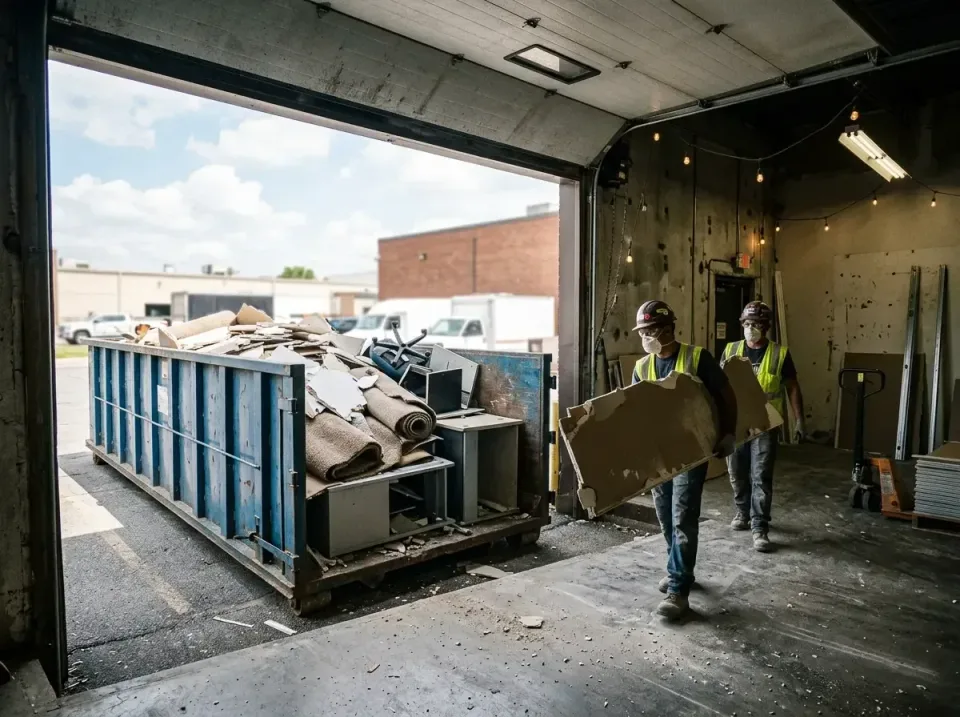
A roll-off dumpster gives crews an open-top container loaded by hand, wheelbarrow, or grapple attachment. The right dumpster rental for contractors also provides a clear weight limit, working doors, and a pickup plan that matches the demolition schedule.
The 1960s shift toward standard front-load commercial dumpsters helped regular businesses manage municipal solid waste (MSW). Demolition sites need a different setup because large structural pieces arrive in bursts, not as steady daily trash.
A cable-hoist roll-off truck places and removes containers built for heavier work. Demolition debris may include lumber, drywall, roofing material, scrap metal, and inert material, so a basic front-load service often lacks the volume and loading access required.
A 30-yard demolition debris container suits many building tear-outs when crews need room for mixed materials. Concrete-only containers work better for dense rubble because separating the waste stream can reduce load contamination and protect the project from weight-related charges.
The Construction & Demolition Recycling Association promotes better recovery practices across the industry. At a material recovery facility (MRF), separated metal and other recoverable material may support a higher diversion rate than a mixed landfill load.
Pickup delays leave debris at the site, interfere with equipment, and can create neighbor complaints. Set the pickup window before demolition begins, then keep the container below its rim and the doors closed when crews are not loading.
A provider should review truck access, overhead wires, surface firmness, and turning space before delivery. The placement area needs enough room for spotting, and the truck commonly requires 60 feet of clear approach for safe container handling.
Street placement also creates a permit question. Before placing a container in a public right-of-way, contractors should confirm municipal waste permit guidance with the Local Municipal Permitting Office and account for any HOA visibility rules.
A container can look half full while dense masonry has already consumed much of its tonnage allowance. That is why a weight ticket matters after the landfill gate or transfer station records the load.
Small providers may quote volume without explaining tonnage, tipping fees, or the overage fee. A heavy-duty operator should state what materials are accepted, how the load is weighed, and what happens if concrete or soil exceeds the agreed limit.
Demolition contractors should separate scrap metal, clean rubble, and mixed construction waste when practical. This can reduce contamination, improve recycling waste diversion, and make the final disposal record easier to review.
A cubic yard equals 27 cubic feet, so capacity describes volume rather than the full weight a truck can legally haul. The 10-yard versus 20-yard choice also changes tonnage, not simply floor space.
| Option | Best for | Key detail |
|---|---|---|
| 10-yard roll-off | Small demolition phase | Approx. 2-ton limit; useful when material stays light |
| 30-yard roll-off | Mixed demolition debris | Approx. 4-ton limit; supports larger tear-outs |
| 40-yard roll-off | Large commercial projects | Approx. 6-ton limit; needs generous placement space |
| Bagster | Small DIY bag pickup | Lower volume and different cost per haul |
A Bagster may suit a minor cleanup, but it rarely matches the loading speed or capacity of a demolition roll-off. Recycled loads may also receive a lower tipping fee than mixed landfill material, depending on the facility.
Contractors comparing options should review commercial dumpster service considerations alongside local disposal rules before choosing equipment.
Measure: Reserve a level, firm area and confirm truck clearance before ordering a 30-yard demolition debris container.
Protect: Place wood planks under the wheels because they help prevent rutting on asphalt and softer ground.
Load: Use a grapple attachment for demolition debris handling, and keep heavy rubble distributed across the container floor.
Screen: Ask what materials are prohibited in dumpsters; asbestos is banned from standard dumpsters and requires separate handling.
Schedule: Request pickup 24–48 hours ahead, keep the load below the rim, and report hazardous materials immediately.
A street container may require a city permit, so right-of-way rental guidance should be checked before delivery.
Common sizes include 10, 20, 30, and 40 cubic yards, but demolition pricing also reflects load type and disposal handling.
10-yard residential cleanup: $300–$500, based on size.
20-yard construction debris: $450–$650, based on load type; this size carries approximately a 3-ton limit.
30-yard commercial dumpster: $550–$800, based on disposal fees.
Concrete and rubble: $600–$900, based on weight.
Roofing tear-off: $500–$700, based on shingle volume.
Same-day delivery: $100–$200 surcharge, based on urgency.
An overage fee may add $40–$100 per ton when the included allowance is exceeded. Final quotes vary by location, weight, and dumpster size get a written estimate.
A front-load dumpster suits scheduled business waste, but demolition crews usually need an open roll-off with greater loading access. Ask how the delivery fee is handled; $50–$200 is often included, depending on the job.
Tonnage matters most when a load contains concrete, brick, soil, or plaster. A weight ticket from the transfer station can show whether the charge came from volume, material density, or the landfill’s recorded load.
Keep at least 60 feet clear for the truck, including room for spotting and cable-hoist movement. A blocked approach can cause a dry run, creating delay before demolition even starts.
A low-looking load can still be heavy when masonry sits beneath lighter debris. Separate dense materials early and ask for tonnage terms before the first piece enters the container.
Common mistake: Choosing a container by visible volume while ignoring the weight allowance for rubble.
Heavy-duty dumpsters give demolition contractors more control over dense rubble, mixed debris, and changing job phases. The right container also reduces pickup delays, driveway damage, and hidden fees after drop-off.
NJ Dumpster Rentals can help North Haledon crews compare demolition waste removal service, concrete and rubble removal, and full-service junk removal crew options. Confirm placement, tonnage, accepted materials, and pickup timing before work begins.
Do not place tires, batteries, paint, or appliances with Freon into a standard container. Separate prohibited items and ask about disposal routing before the truck arrives.
For a clear next step, call NJ Dumpster Rentals at (844) 606-1601 with the site address, debris type, access conditions, and expected load volume.
Browse all nationwide service options and choose the right fit for your project.
Small dumpsters handle home cleanouts, remodeling debris, and yard waste for North Haledon homeowners and contractors.
Homeowners, contractors, and property managers book medium dumpsters for renovations, cleanouts, and contained debris removal in North Haledon.
Large dumpsters help North Haledon homeowners, contractors, and property managers handle major debris loads.
Construction dumpsters for North Haledon homeowners, contractors, and property managers handling remodeling, demolition, and building debris.
Homeowners, contractors, and property managers can book same-day dumpster delivery and pickup for North Haledon projects.
Homeowners and contractors book residential dumpsters in North Haledon for renovations, cleanouts, roofing, and yard debris.
Contractors and property managers book commercial dumpsters for construction debris, office cleanouts, and scheduled waste pickup in North Haledon.
Homeowners and contractors book renovation dumpsters for drywall, lumber, flooring, roofing, and remodeling debris in North Haledon.
Homeowners, contractors, and property managers book North Haledon demolition waste removal for lumber, drywall, concrete, and rubble.
Homeowners, families, and property managers use estate cleanup dumpsters for furniture, household debris, and downsizing projects in North Haledon.
Homeowners, landscapers, and property managers can remove branches, leaves, grass, and landscaping debris in North Haledon.
Homeowners and contractors use our North Haledon service for concrete, brick, asphalt, and rubble removal.
Homeowners, contractors, and property managers can book North Haledon bins for ferrous and nonferrous scrap recycling.
Homeowners, roofers, and property managers book North Haledon roofing debris removal for shingles, felt, and tear-off waste.
Homeowners, contractors, and property managers book furniture and appliance removal for bulky household and commercial cleanouts.
Property managers book right-sized dumpsters for cleanouts, renovations, demolition debris, and scheduled property cleanup in North Haledon.
Contractors and builders book North Haledon dumpsters for construction debris, demolition waste, roofing tear-offs, and commercial cleanups.
Homeowners and property managers book North Haledon spring cleanouts for furniture, appliances, yard waste, and household junk.
Homeowners, landlords, and property managers book moving dumpsters for furniture, boxes, and relocation debris in North Haledon.
Homeowners, contractors, and property managers book bulk waste disposal for furniture, renovation debris, concrete, and yard waste in North Haledon.
Retail, warehouse, and office projects across North Haledon — commercial construction debris removal with billing clarity and scheduled haul-offs.
Homeowners, contractors, and property managers book North Haledon disaster cleanup dumpsters for storm, fire, and demolition debris.
Long-term containers help North Haledon homeowners, contractors, and property managers control debris throughout extended projects.
Homeowners, contractors, and property managers book North Haledon recycling and waste diversion for cleaner debris removal.
Weekend and holiday dumpsters help North Haledon homeowners, contractors, and property managers clear projects on their schedule.
Select your region to see local cheapest dumpster rentals providers and cities we cover.
We connect you with trusted local providers in your state or city. Call or email us today.