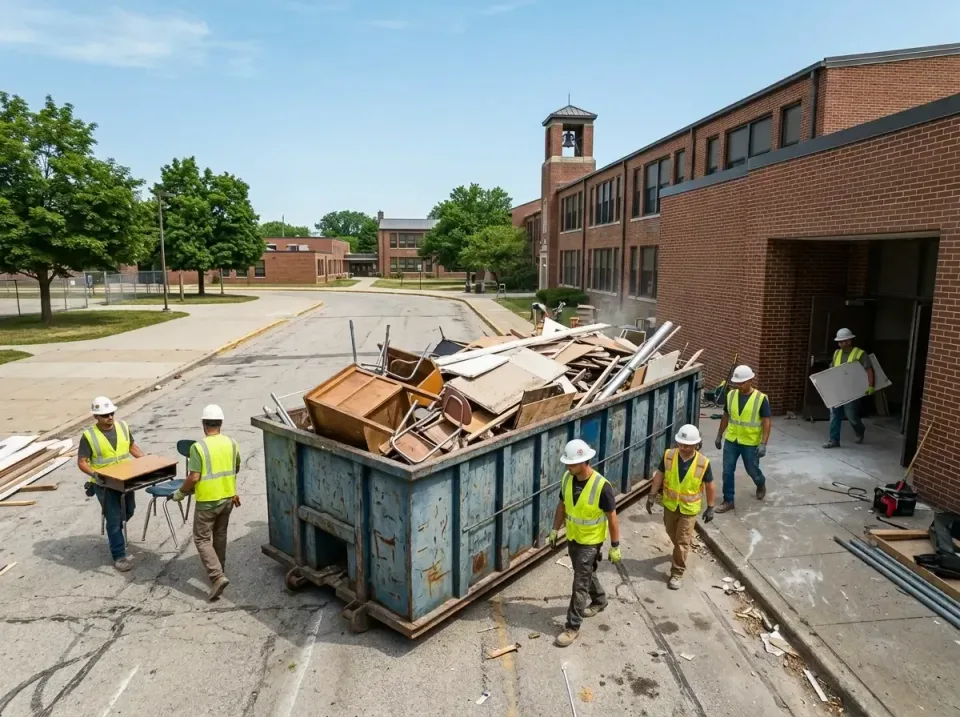
Small Dumpster Rental
Small dumpsters handle home cleanouts, remodeling debris, and yard waste for North Haledon homeowners and contractors.
A full roof replacement usually needs a 20-yard roll-off dumpster, while heavier or multi-layer tear-offs may need 30 yards. Roofing shingles add weight quickly, so volume alone cannot decide the size.
In North Haledon, a front-load dumpster is usually for scheduled commercial waste, not a one-time roof tear-off. An open-top roll-off gives roofers room to load shingles and felt directly.
Ask for a written quote that states container size, included tonnage, rental dates, and pickup terms. That prevents a small container or an unexpected charge after drop-off.
The truck also needs a level placement area and clear access. Homeowners planning projects beyond New Jersey can review all service areas before arranging a comparable roofing debris disposal service.
Start with 20 yards: A full residential tear-off often fits a 20-yard roll-off dumpster, but multiple shingle layers can require more capacity.
Check tonnage: A 20-yard container may include approximately three tons, so ask about the overage fee before delivery.
Use a dumpster spotter: A spotter helps the driver avoid low branches, parked cars, and narrow driveway edges during placement.
Keep prohibited items out: Tires, batteries, paint, and appliances containing Freon should not enter roofing debris loads.
Plan the tipping fee: A transfer station or landfill gate may charge according to the weight ticket, not just container volume. Roofing contractors should confirm portable site equipment guidance when coordinating other job-site units.
A 20-yard construction dumpster is the usual starting point for one residential roof replacement. It holds 20 cubic yards, with each cubic yard equal to 27 cubic feet, and commonly carries about three tons.
A 10-yard container may work for a small detached garage or limited tear-off. A 30-yard container is safer for a large roof, several shingle layers, or a roofing crew working on multiple sections. A 40-yard container provides more volume, but its approximate six-ton limit still matters.
A dumpster rental size guide should consider roof area, shingle layers, sheathing, underlayment, and packaging. Do not choose an estate cleanout dumpster size needed for household contents unless the roofing load has been calculated separately.
Roofing shingles, felt, nails, wood scraps, and construction & demolition (C&D) debris are commonly suitable. Mixed debris may be accepted without sorting, but inert material such as concrete, brick, or soil can consume the weight allowance quickly.
Keep asbestos-containing material, lead paint debris, batteries, tires, and paint out of a standard container. The Environmental Protection Agency and state hazardous waste regulations treat these materials differently from ordinary roofing waste.
If an old appliance is removed during the project, confirm whether chlorofluorocarbon recovery is required before loading it. A roofing waste disposal resource can help contractors separate ordinary tear-off material from restricted streams.
Most roofing projects fit a seven-to-fourteen-day rental period. Schedule delivery before tear-off begins, then arrange pickup 24–48 hours after loading is complete.
A roll-off dumpster suits a temporary replacement because a cable-hoist roll-off truck places and removes the open-top container. A front-load dumpster follows scheduled regular pickup and may require more frequent service for ongoing commercial waste.
Keep shingles below the rim and close the doors when loading ends. Overfilling can prevent safe transport, create neighbor complaints, and require unloading before the driver can legally haul it.
A driveway should be level, firm, and wide enough for the truck, with about 60 feet clear for spotting and placement. Plywood or driveway protection boards can reduce rutting and surface damage beneath the container.
Street placement requires a city permit, and HOA rules may restrict visibility or placement. Confirm the location with North Haledon’s Local Municipal Permitting Office before delivery, especially if the driveway cannot hold the container.
The driver also needs adequate overhead clearance, including space around wires and tree limbs. A dry run caused by blocked access can delay the tear-off and leave debris beside the home.
Roofing volume and tonnage should be reviewed together. Local transfer station relationships can affect the disposal route and final handling charge.
A dumpster versus Bagster comparison usually favors a roll-off for a complete roof because a Bagster handles a smaller load and may cost more per haul.
The 10-yard versus 20-yard choice is mainly a capacity and tonnage decision. A 20-yard container generally allows more working room, while a 30-yard option reduces overflow risk for layered shingles.
| Option | Best for | Key detail |
|---|---|---|
| 10-yard roll-off | Garage or small roof | Approx. 2-ton limit |
| 20-yard roll-off | Typical full replacement | Approx. 3-ton limit |
| 30-yard roll-off | Large or layered roof | Approx. 4-ton limit |
| Bagster | Small DIY tear-off | Smaller size and separate haul economics |
Roofers comparing disposal routes should ask whether a recycled load receives a lower tipping fee than landfill disposal; portable sanitation planning information may also matter on longer construction sites.
Estimate: Count roof layers, sheathing, and tear-off area before choosing a 20-yard or 30-yard container.
Reserve: Give the hauler at least 24 hours’ notice for container delivery and provide the exact North Haledon address.
Prepare: Clear vehicles, branches, and wires; overhead clearance of 15 feet is typical for delivery.
Protect: Place plywood or wood planks beneath the wheels where rutting could damage asphalt.
Load safely: A cable hoist handles the roll-off container; keep debris below the rim and doors closed afterward.
Finish: Schedule pickup by phone or online 24–48 hours ahead, using GPS tracking if the provider offers it.
Roofing tear-off commonly falls near $500–$700 because shingle volume and weight affect disposal. Regional landfill and transfer station charges can move the final amount.
10-yard residential cleanup: $300–$500, generally suited to smaller loads.
20-yard construction debris: $450–$650, a common range for residential roofing waste.
30-yard commercial dumpster: $550–$800, with disposal fees affecting the total.
Concrete and rubble: $600–$900, because heavy material uses tonnage quickly.
Same-day delivery: $100–$200 surcharge when urgency requires it.
A 40-yard container may carry approximately six tons, but access still requires about 60 feet clear for the truck. Final quotes vary by location, weight, and dumpster size get a written estimate.
A cubic yard measures space, while tonnage measures the load’s actual weight. Shingles can fill a container before the homeowner realizes the weight allowance is nearly used.
Ask whether the provider supplies a weight ticket from the landfill gate or transfer station. That document helps explain disposal charges and any overage fee.
A Toter is better suited to smaller routine waste collection than a full roof replacement. For a temporary tear-off, a roll-off dumpster normally gives the crew safer loading access.
A roofing crew should confirm both cubic capacity and included tonnage before the truck arrives. That small check prevents a dry run, overflow, or avoidable second haul.
Common mistake: Choosing a 10-yard container solely because the roof looks small, then paying for an extra haul after layered shingles exceed its capacity.
For most full residential replacements, start by pricing a 20-yard roll-off and compare it with a 30-yard option when layers or roof size increase.
The common choices are 10, 20, 30, and 40 cubic yards, but tonnage, access, and material type decide the practical fit. Driveway protection boards may be required when the placement surface could rut or crack.
If tear-off labor, sorting, or hauling is beyond your crew, a full-service junk removal crew or roofing waste removal service can reduce site delays. Confirm pickup timing so debris does not remain after the roof is finished.
For North Haledon, NJ projects, NJ Dumpster Rentals can review the roof size, placement, access, and disposal stream before preparing a written quote. Request the container size and included tonnage together.
Browse all nationwide service options and choose the right fit for your project.
Small dumpsters handle home cleanouts, remodeling debris, and yard waste for North Haledon homeowners and contractors.
Homeowners, contractors, and property managers book medium dumpsters for renovations, cleanouts, and contained debris removal in North Haledon.
Large dumpsters help North Haledon homeowners, contractors, and property managers handle major debris loads.
Construction dumpsters for North Haledon homeowners, contractors, and property managers handling remodeling, demolition, and building debris.
Homeowners, contractors, and property managers can book same-day dumpster delivery and pickup for North Haledon projects.
Homeowners and contractors book residential dumpsters in North Haledon for renovations, cleanouts, roofing, and yard debris.
Contractors and property managers book commercial dumpsters for construction debris, office cleanouts, and scheduled waste pickup in North Haledon.
Homeowners and contractors book renovation dumpsters for drywall, lumber, flooring, roofing, and remodeling debris in North Haledon.
Homeowners, contractors, and property managers book North Haledon demolition waste removal for lumber, drywall, concrete, and rubble.
Homeowners, families, and property managers use estate cleanup dumpsters for furniture, household debris, and downsizing projects in North Haledon.
Homeowners, landscapers, and property managers can remove branches, leaves, grass, and landscaping debris in North Haledon.
Homeowners and contractors use our North Haledon service for concrete, brick, asphalt, and rubble removal.
Homeowners, contractors, and property managers can book North Haledon bins for ferrous and nonferrous scrap recycling.
Homeowners, roofers, and property managers book North Haledon roofing debris removal for shingles, felt, and tear-off waste.
Homeowners, contractors, and property managers book furniture and appliance removal for bulky household and commercial cleanouts.
Property managers book right-sized dumpsters for cleanouts, renovations, demolition debris, and scheduled property cleanup in North Haledon.
Contractors and builders book North Haledon dumpsters for construction debris, demolition waste, roofing tear-offs, and commercial cleanups.
Homeowners and property managers book North Haledon spring cleanouts for furniture, appliances, yard waste, and household junk.
Homeowners, landlords, and property managers book moving dumpsters for furniture, boxes, and relocation debris in North Haledon.
Homeowners, contractors, and property managers book bulk waste disposal for furniture, renovation debris, concrete, and yard waste in North Haledon.
Retail, warehouse, and office projects across North Haledon — commercial construction debris removal with billing clarity and scheduled haul-offs.
Homeowners, contractors, and property managers book North Haledon disaster cleanup dumpsters for storm, fire, and demolition debris.
Long-term containers help North Haledon homeowners, contractors, and property managers control debris throughout extended projects.
Homeowners, contractors, and property managers book North Haledon recycling and waste diversion for cleaner debris removal.
Weekend and holiday dumpsters help North Haledon homeowners, contractors, and property managers clear projects on their schedule.
Select your region to see local cheapest dumpster rentals providers and cities we cover.
We connect you with trusted local providers in your state or city. Call or email us today.